The objective of every Developer during the Sprint is to create an increment at the end of the Sprint to achieve the Sprint Goal.
Scrum is a framework of roles, rules, and principles. It helps the Developer discover and identify the best way to achieve their goal.
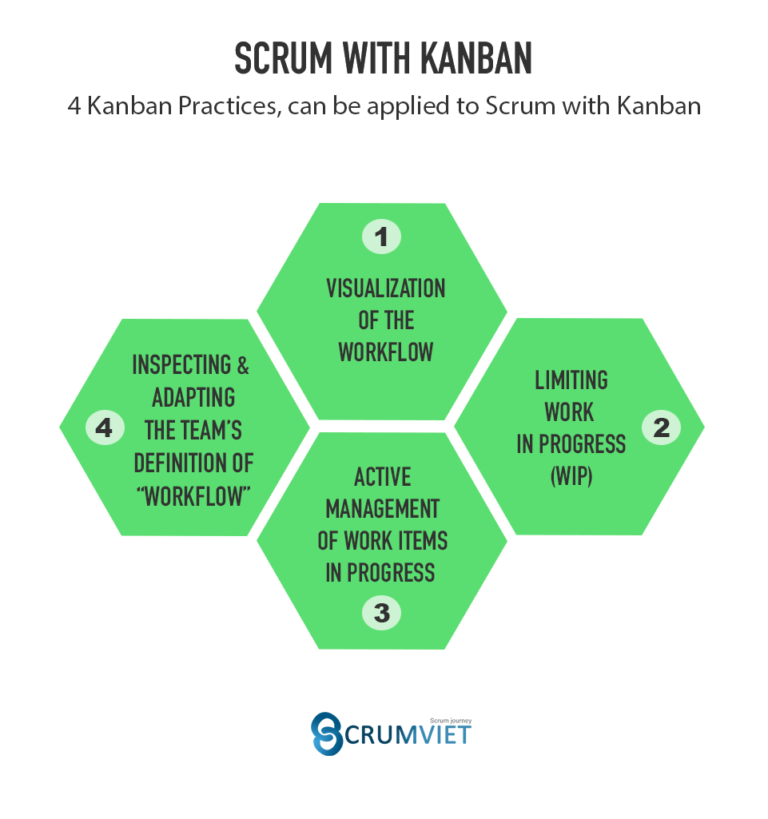
In every Sprint, the Developer has too many Work Items that need to be completed to create value. But the questions are: How to make sure that each Work Item will be performed in correct steps, and the right work items will be chosen and performed at the right time, to maximize value. A workflow will help the team deal with these questions.
“Workflow is the sequential movement of work items from one activity to another in a process.”
Developer should create their own Workflow based on the shared understanding within the team. All the elements in the workflow, such as work items, Work Item statuses (initial state, active state, and complete state), upstream and downstream movement, need to be identified based on the empirical practice of the developer to improve efficiency, effectiveness, and predictability.
From the beginning of Product/ Project, when the team is not mature, the workflow should be initiated as a visual and simple flow. The team will maximize transparency, inspection, and adaptation to improve the flow during mature stages.
What are the benefits of the Definition of Workflow?
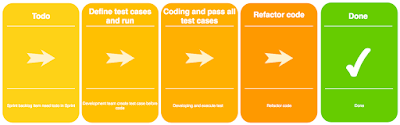
We will figure out the benefits of the definition of Workflow from an example with a team applying TDD – Test-Driven Development.
TDD is a software development process based on the repetition of a short development cycle. It starts with designing and developing tests for every small functionality. TDD cycle defines: Write a test case, make it run, write the code, and make it right by refactoring until the code passes the test case.
- Self-management, Transparency & Visualization of Workflow: In Sprint Planning, the Scrum team will plan how many Product Backlog Items need to be done in the Sprint. They will create a plan and strategy for each Product Backlog Item such as: How to write the code to make sure it can pass the test cases, etc… And during the Sprint, they can be aware of how many work items are ready for testing or need to be refactored, how many work items have been done. From the example above, the Developer can manage their in-progress work items and to-do list effectively. Transparency and visualization will bring the right communication at the right time, eliminate loss, delay, and wasted time: respond quickly, proactively.
- Less stress for Developer, avoid overloading: Visualizing Board can help Developer to easily figure out the bottleneck situation, unassigned work items. Then the team can balance the workload for each member.
- Inspect, Adapt – Opportunity to improve: While applying the workflow, the developer will find out that something is not suitable, or is no longer suitable, for their team. It’s an opportunity for them to create an improvement for their workflow. E.g add more or remove a column from the Sprint Board – to make their work move more effectively and smoothly.
In conclusion, similar to the Definition of Ready, the Definition of Workflow is not a “Stage of Gate”. It is a good practice to let the Developer maximize the value of their work. Therefore, the Definition of Workflow must be created and owned by the Developer based on their needs and empirical practices. When they are able to manage and determine the Workflow, transparency will be increased significantly.
NOTE: Scrum guide 2020 updated – “Development team” changed to “Developer”.