Are we really a Team? A couple of years ago, I had the chance to work with a great team. Yes! They were a great team, but not from the beginning…that was a broken team when I came.
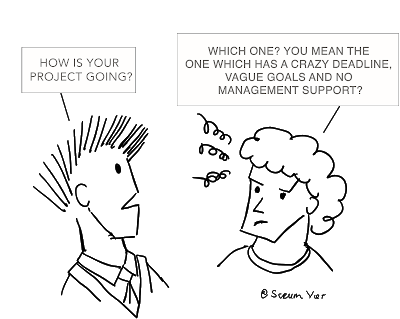
– The team used Scrum, but the Transparency was lost. The developer hid issues from the Product Owner when the Product Owner asked. They said, “All good!” but they were actually deep in bugs and impediments and couldn’t deliver working software.
– The team complained that the goal was changed frequently by the Product Owner.
– Disappointment appeared between the Developer and Product Owner at every Sprint Review.
– The higher manager started to doubt the quality and progress. Therefore, they put increasing pressure on the team and asked for more reports. This action didn’t help to improve the situation but only made it more terrible.
– Every time something went wrong, people started to complain to each other, and this led to “fear mode”. They started to say “I”, not “We”.
In a tough time, I planned to do many things to support the team, but first I asked them: “As a Team, do you TRUST each other?”

Why is trust important?
Trust is important because it is the foundation of how human relationships revolve. Without trust, there will be no relationship. In some relationships, like a family, trust exists naturally. In other relationships, people need to build trust over time.
Lack of trust: The relationship will be broken – Transparency is lost. People start to play defense; no one wants to work as a team and collaborate for a common goal.
In my experience, nothing is more important for Teamwork than trust. If there is a second most important thing, it’s TRUST as well. You can’t build a good team while they lack trust.
What should we do to build trust?
I used to say: “If you want someone to trust you, you need to trust them first”. Or we can say, to trust someone, you need to be Courageous first!
It’s hard, right? What if you give them trust, but they give you disappointment? What if they do something wrong? What if we fail?
I believe we have an answer in the Scrum Framework. It supports the Scrum team to be courageous:
- Managing the risks by Sprint.
- Having the Daily Scrum to support Developer review and an updated plan to achieve the Sprint goal at the end of the Sprint.
With a time-box, the Scrum Team has a chance to learn, fail, and improve continuously.
“Be courageous! We can fail, but fail quickly and learn.”
Therefore, be courageous to do a thing the team has never tried before. To do a thing we do not understand fully because we are in a complex situation. Being courageous supports Scrum Values:
- Product Owner needs to trust the Developer: they will do their best to create a DONE increment at the end of the Sprint.
- The developer needs to trust the Product Owner for his/ her vision.
- Scrum team members trust each other, not only on their strengths but also their weaknesses.
- The higher manager needs to trust the Scrum team and give them a space to be self-organized.
To be honest, as a leader, when communicating, keeping the commitment in the team and keeping transparency with each other are important to build trust as well.
“As a leader, you need to trust your team first to be trusted.”
How long does it take to build trust?
“It will never ever be a one-day job…”
As a Scrum Master, one of your daily jobs is building and maintaining trust among a team, raising the 5 values of Scrum. Your work is not a short-term job but step-by-step. Even if it is rebuilding or building trust.
NOTE: updated to follow Scrum guide 2020

#Startup #Howtobuildteam